There are few places where the language of American history is as immediate as it is in Washington. The U.S. Capitol rises at one end of the Mall. The Washington Monument commands the skyline. The National Archives holds the documents that shaped the nation. On August 22 and 23, that familiar civic landscape will add an entirely new sound: the sharp, urgent acceleration of race cars threading through the streets of the capital.
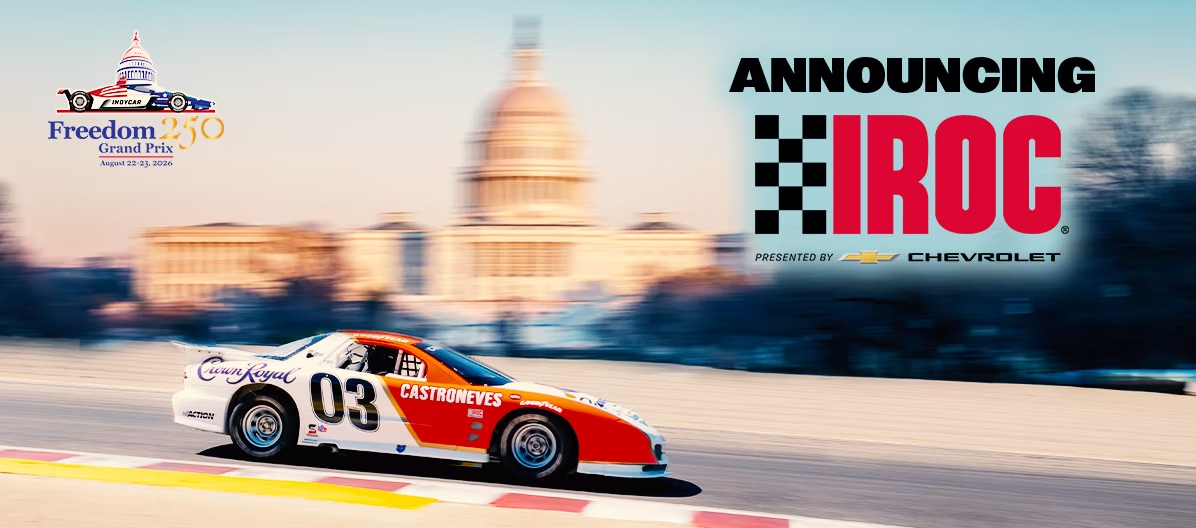
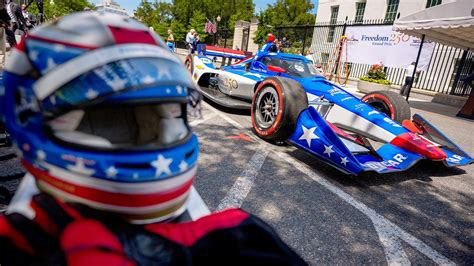
The Freedom 250 Grand Prix of Washington DC is set to bring the NTT INDYCAR SERIES to the National Mall and surrounding streets for the first time, turning the city into one of the most visually unusual venues in modern American motorsports. The two-day event, part of the nation’s 250th-anniversary celebrations, will culminate with the INDYCAR race on Sunday, August 23. But the weekend now carries an additional layer of racing history. On Saturday, August 22, the revived International Race of Champions—IROC—will stage a special exhibition race featuring NASCAR champions and Indianapolis 500 winners in authentic Pontiac Firebirds.
It is an ambitious pairing: today’s high-tech open-wheel championship alongside a format built around historic cars, equal equipment and the old-school question of what happens when elite drivers are given the same machine.
All times are Eastern. Schedules are subject to change.
Saturday Schedule
INDYCAR practice and qualifying, plus two IROC races.
-
8:00 AM–6:30 PM
Public Gates Open
-
9:05 AM
NTT INDYCAR SERIES Practice 1 FS1
-
11:10 AM
IROC Practice
-
11:15 AM
NTT INDYCAR SERIES Driver Autograph Session
-
12:10 PM
IROC Practice 2
-
1:05 PM
NTT INDYCAR SERIES Practice 2 FS2
-
1:30 PM
IROC Driver Autograph Session
-
3:00 PM
IROC Race 1 20-minute race
-
4:00 PM
IROC Race 2 20-minute race
-
4:30 PM
IROC Post-Race Ceremonies
-
5:00 PM
NTT INDYCAR SERIES Qualifying FS2
Sunday Race Day
The inaugural Freedom 250 Grand Prix of Washington, D.C.
-
8:00 AM
Gates Open
-
9:15 AM
NTT INDYCAR SERIES Warm-Up FS1 coverage begins at 9:00 AM. FS1
-
11:30 AM
NTT INDYCAR SERIES Pre-Race Activities FOX
-
1:00 PM
Freedom 250 Grand Prix of Washington, D.C. FOX
-
3:15 PM
NTT INDYCAR SERIES Post-Race Ceremonies
A Grand Prix With No Ordinary Backdrop
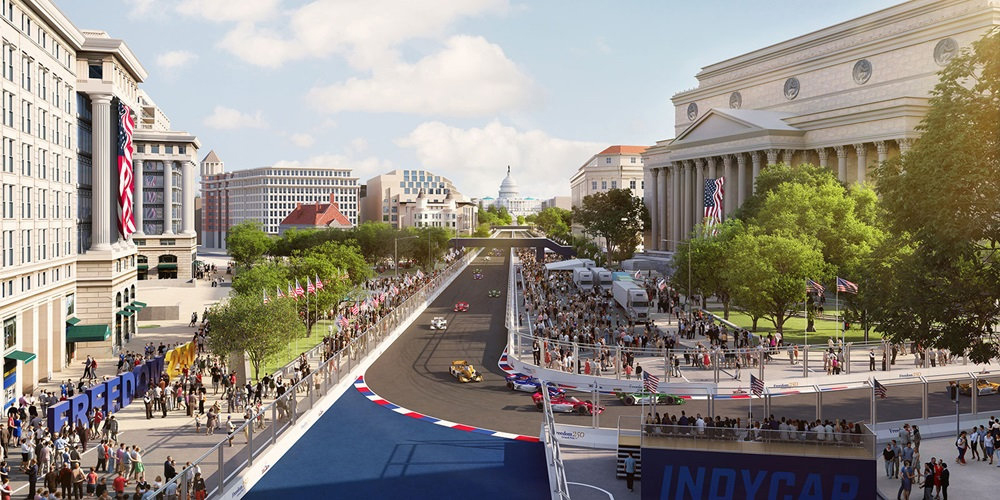
The Freedom 250 Grand Prix course is a temporary, seven-turn street circuit of approximately 1.7 miles. Its defining feature will be a 0.4-mile run along Pennsylvania Avenue, framed by the Washington Monument and the U.S. Capitol, with the pit lane positioned off that straight between Turns 1 and 2. The route also takes the field past the Smithsonian National Air and Space Museum, the National Gallery of Art and the National Archives.
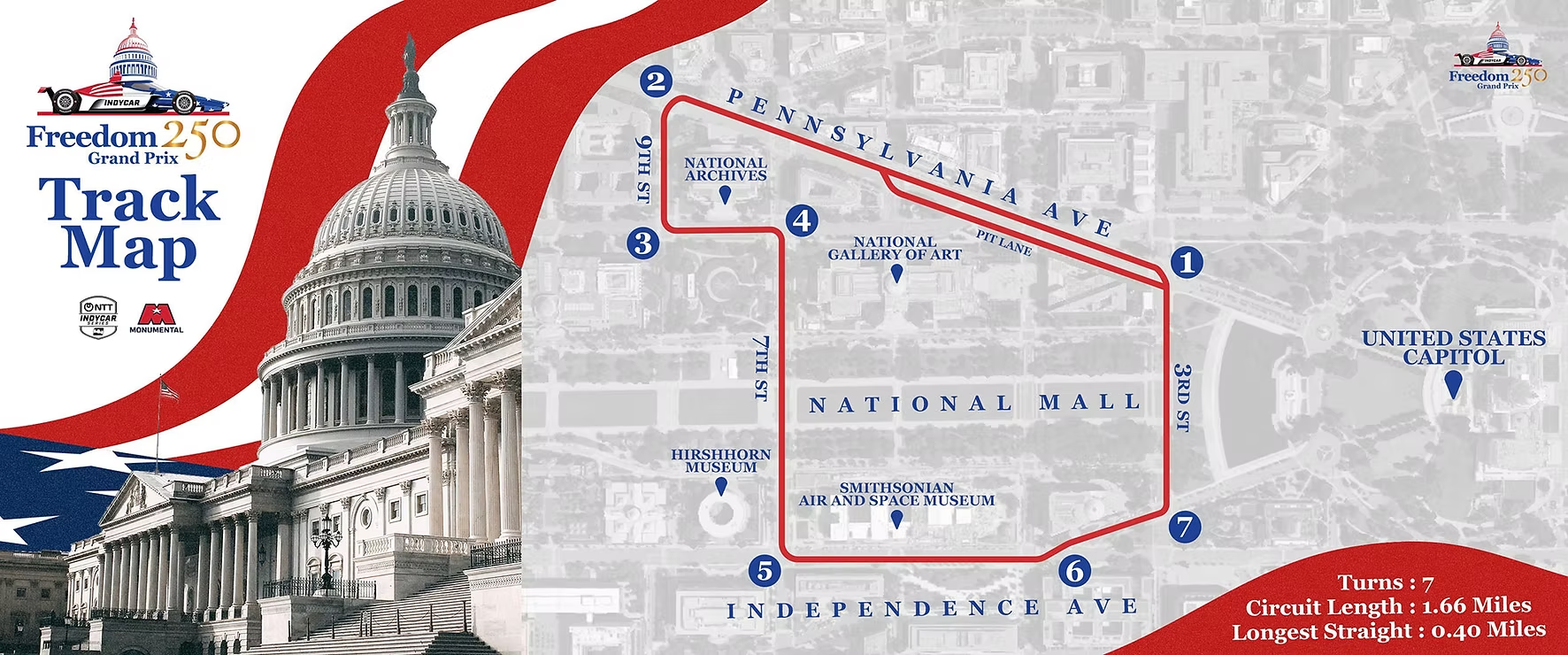
That setting is not merely a scenic novelty. Street circuits demand a distinct kind of discipline. Unlike a permanent speedway, where the road was built for racing, a temporary course asks drivers to negotiate narrow visual corridors, hard braking zones and corners shaped by existing city streets. INDYCAR’s own description of the layout points to a contrast between the speed of Pennsylvania Avenue and the technical corners near 9th Street—a combination likely to reward precision as much as aggression.
The race was formally established by an executive order signed January 30, 2026, and is being administered by INDYCAR in coordination with the White House Task Force on Celebrating America’s 250th Birthday, the U.S. Departments of Transportation and the Interior, and the DC mayor’s office. Organizers describe it as the first auto race held on the National Mall and Washington’s historic streets.
For Washington, a city accustomed to national ceremonies, marches, festivals and championship celebrations, the Grand Prix introduces a different sort of public spectacle: one built around velocity, competition and the improbable visual of racing cars moving between some of the country’s most recognized institutions.
Sunday Belongs to INDYCAR
The centerpiece of the weekend will be the NTT INDYCAR SERIES race on Sunday, August 23. The official race distance and start time had not yet been published at press time, but the event is scheduled for live national television coverage on FOX, with radio coverage from the INDYCAR Radio Network and SiriusXM INDYCAR Nation.
For people encountering INDYCAR for the first time, the cars are fundamentally different from the stock cars many casual racing fans associate with NASCAR. They are single-seat, open-wheel machines, with exposed tires, low ground clearance and aerodynamics designed to create enormous grip through corners. The field uses the standardized Dallara IR-18 chassis, while engine competition comes from Honda and Chevrolet. Current power comes from 2.2-liter twin-turbocharged V6 engines with hybrid technology, producing more than 700 horsepower.
That technology matters especially on a street course. The hybrid system captures and redeploys energy, while the road-and-street-course push-to-pass system gives drivers a limited tactical reserve of extra power to attack or defend. It means a race can turn on a fraction of a second: an exit from a corner, a late braking move, a driver choosing the exact moment to use available power.
The Freedom 250 will be a first visit for the series, so there is no established Washington formbook. Every team will arrive having studied the course, simulators and track plans, but no INDYCAR driver will have prior race data from this particular circuit. That makes the initial practice sessions more consequential than usual. Teams will be learning how the surface behaves, where passing may be possible and how much risk the course permits.
The larger promise is visual as well as competitive. Most races ask fans to remember the turns. This one may be remembered by what appears beyond them: the Capitol dome, the Monument, the museums and the avenue that links the White House and Capitol Hill.
“This circuit is unlike any other street race we’ve seen.”Josef Newgarden, two-time NTT INDYCAR SERIES champion and back-to-back Indianapolis 500 winner
Saturday’s Throwback: IROC Returns to the Grid
The announcement that transformed the weekend from a historic new INDYCAR stop into a multigenerational motorsports event arrived June 25: IROC Presented by Chevrolet will join the Freedom 250 lineup for a special Saturday exhibition race.
IROC—the International Race of Champions—was founded in 1973 by Roger Penske, Les Richter and Mike Phelps. Its organizing idea was refreshingly direct: invite exceptional drivers from different forms of racing, put them in identical cars, and remove the usual equipment advantage from the equation. The result became known as a “champion of champions” contest, where reputation had to survive equal machinery.
That original formula brought NASCAR, INDYCAR, Formula 1 and sports-car talent together over its run from 1973 through 2006. In 2024, NASCAR Hall of Famer Ray Evernham and Rob Kauffman acquired the IROC rights and began bringing the brand back through reunion and exhibition events.
Washington’s edition will use authentic IROC Pontiac Firebirds that raced in the series from 1996 through 2006. That is a striking contrast to the sleek, hybrid-powered INDYCAR machines scheduled for Sunday. The Firebirds are historical racing artifacts with real competition pedigree, not newly styled replicas. They carry the memory of IROC’s late-era stock-car identity into a city circuit that has never hosted them before.
The Names That Make the IROC Race Matter
The announced IROC lineup reads less like a conventional entry list than a compact hall of fame.
Former NASCAR Cup Series champions Jeff Gordon, Kurt Busch, Bobby Labonte, Rusty Wallace and Bill Elliott are scheduled to compete. They will be joined by INDYCAR greats and Indianapolis 500 winners Tony Kanaan, Hélio Castroneves and Dario Franchitti.
The appeal is not simply that these names will appear in Washington. It is the contrast in their racing backgrounds. Gordon’s career is inseparable from NASCAR’s modern national rise. Elliott remains one of stock-car racing’s most enduring fan favorites. Wallace and Labonte are champions from an era when NASCAR’s weekly competition was brutally deep. Busch has won at the sport’s highest level across multiple generations. Then there are Kanaan, Castroneves and Franchitti—drivers whose careers were shaped by the particular physicality, speed and precision of open-wheel racing.
IROC removes the familiar team identities and lets the matchup breathe. These are not drivers separated by pit budgets, engineering departments or manufacturer programs. The point is the shared car and the unanswered question that follows: who adapts best?
The legends will practice and race on Saturday, August 22, and the event will also include a free autograph session with the participating former NASCAR and INDYCAR stars.
“IROC has always represented the best of the best, bringing together champions from across motorsports to compete on equal footing.”Bud Denker, Chairman, Freedom 250 Grand Prix
More Than a Race Ticket
The Freedom 250 Grand Prix has been designed as a two-day public motorsports festival, with free general admission, fan activities, large viewing screens, concessions, merchandise locations, music and Main Stage entertainment planned across the venue. A fan activation area is planned on the National Mall between 12th and 7th Streets.
However, there is an important practical detail for readers planning to attend: the official ticket-request window has closed. Fans who requested free general-admission tickets by the June 7 deadline are being notified by email, with successful requests to be fulfilled through Ticketmaster closer to the event. Tickets are assigned by a random drawing and are nontransferable.
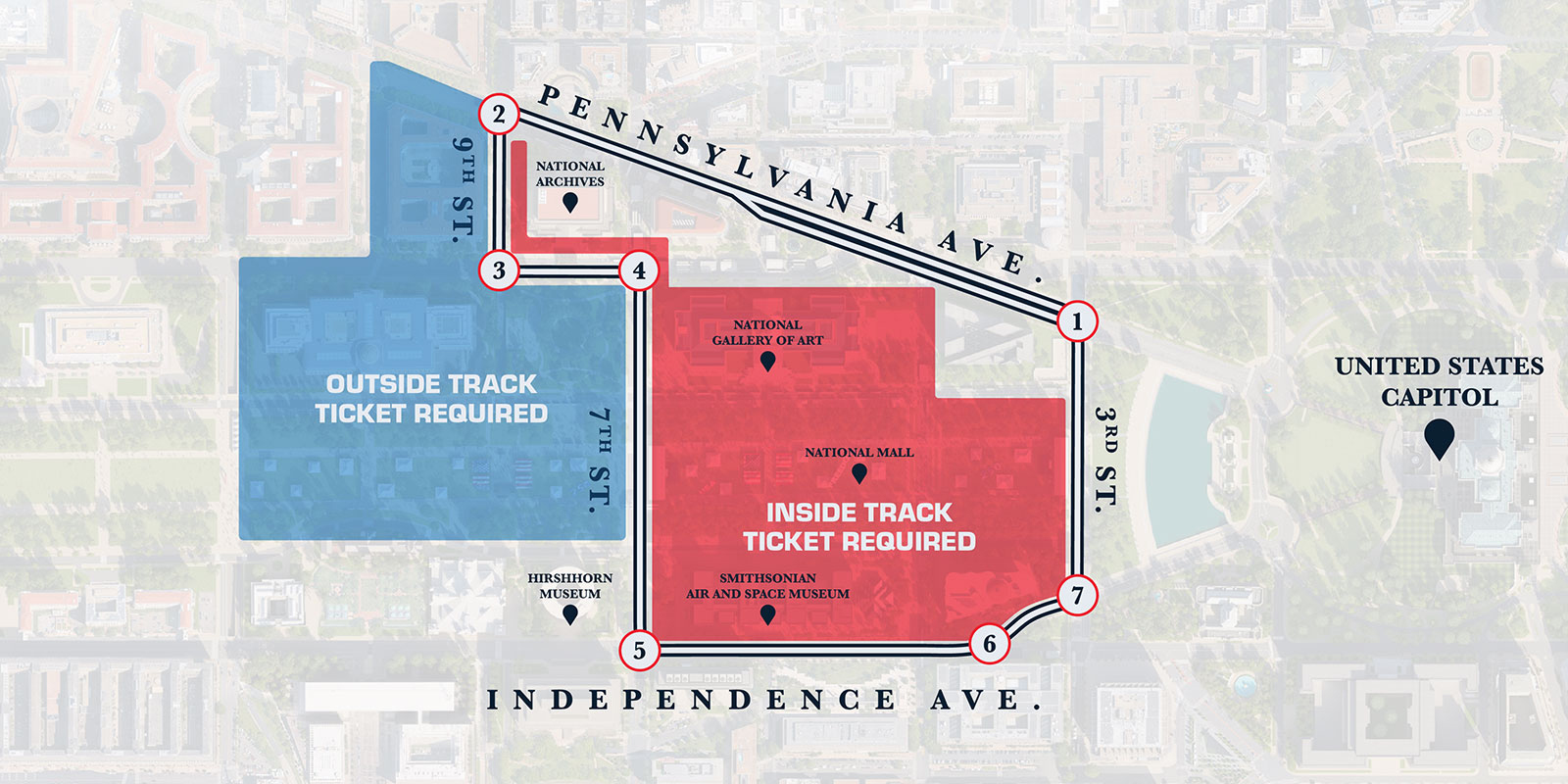
The venue will have two separate ticketed general-admission areas: STARS, outside the track between 12th and 7th Streets south of Pennsylvania Avenue; and STRIPES, primarily inside the course between 7th and 3rd Streets and between Pennsylvania and Independence avenues. A ticket for one area will not provide access to the other. Neither general-admission option includes paddock or pit-lane access, and the event says no paddock or pit passes will be issued because of space limits.
It is a sensible reminder that “free” does not mean casual or unlimited. This will be a major event in a compact and heavily managed downtown footprint. Arrive with the right ticket, expect first-come seating where available, and use the large video screens as part of the experience rather than assuming every viewpoint will offer a clear sightline to every corner.
The Weekend’s Real Story: Past and Present, Sharing One Course
There will be faster cars on Sunday. There will be more technologically advanced cars on Sunday. But Saturday may provide the weekend’s most unusual emotional charge: legends from two rival branches of American motorsports climbing into period-correct Firebirds and racing under the IROC concept that made them equals.
That is why the IROC addition is more than an opening act. It gives the Freedom 250 Grand Prix a richer story. Sunday will look forward, with INDYCAR’s present-day machinery, current championship stakes and a brand-new street circuit. Saturday will look back—not nostalgically, but competitively—at a format that made driver skill the central drama.
Washington is rarely short of symbolism. On this August weekend, the symbolism will be loud, fast and unusually well matched to the setting: a new race in the capital, a revived race of champions, and two very different forms of American motorsport sharing the same streets.
Final Word
The Freedom 250 Grand Prix is not simply adding a race to Washington’s calendar. It is creating a new kind of capital-city event: one where historic landmarks become racing landmarks, where a modern championship meets a revived all-star tradition, and where the past and present of American motorsport take the same green flag—one day apart.