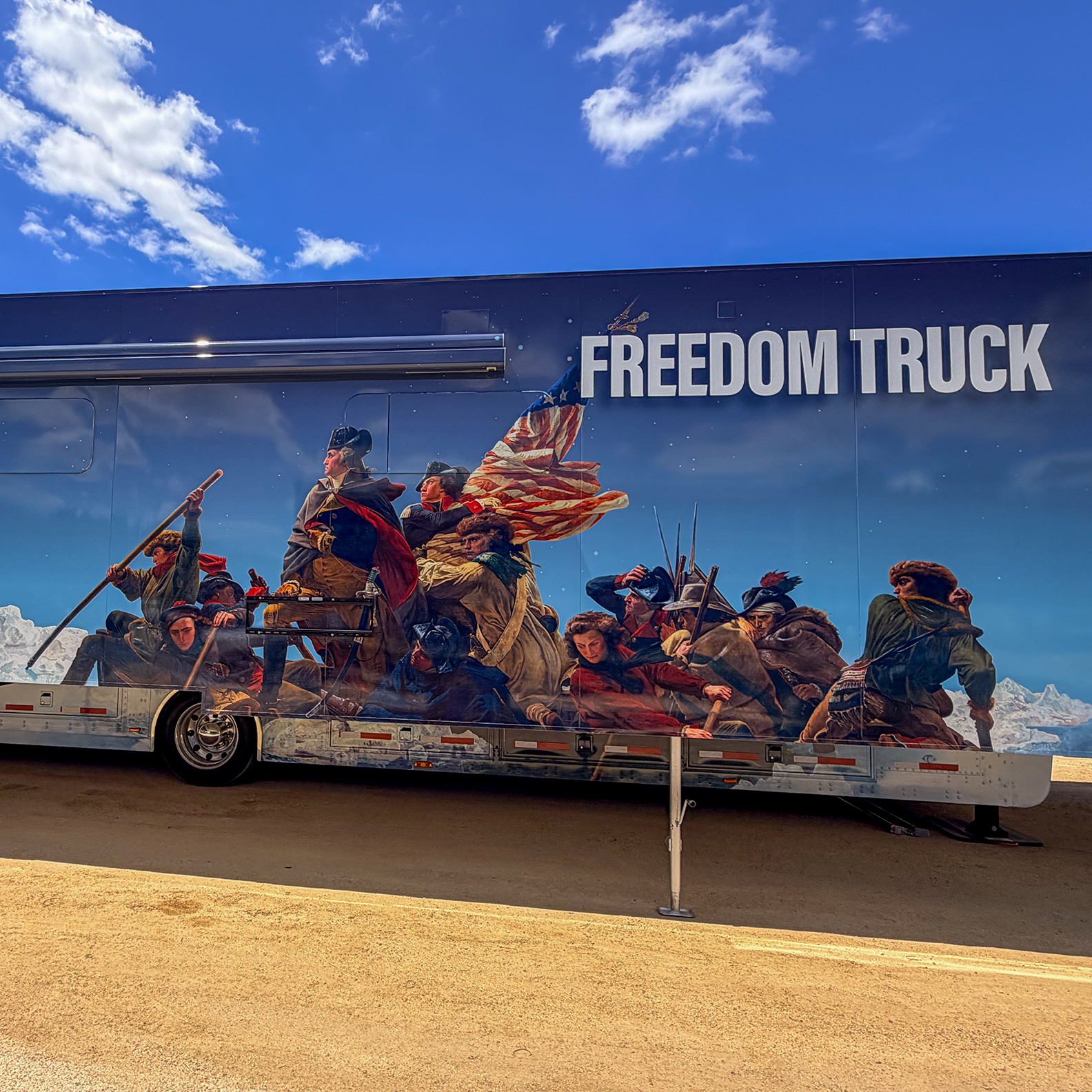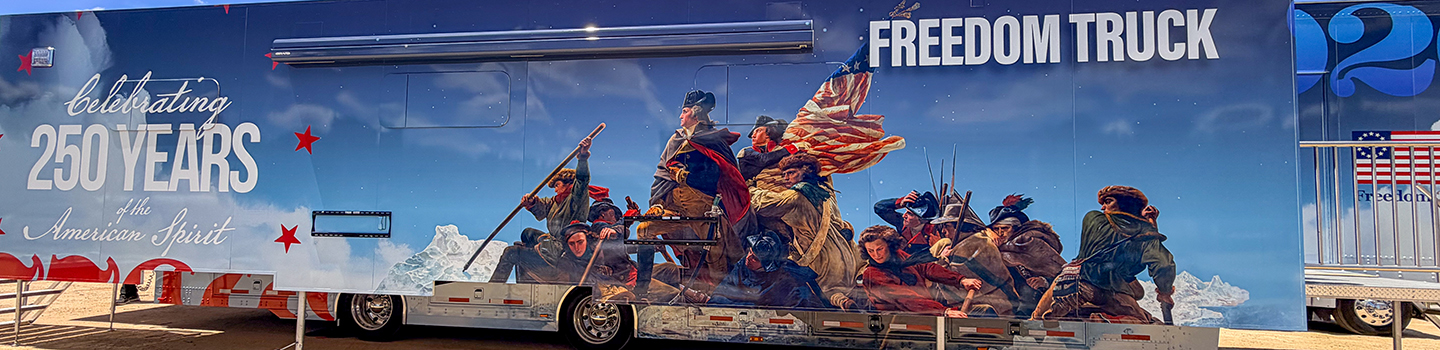
There is something fitting about the idea of American history arriving on eighteen wheels.
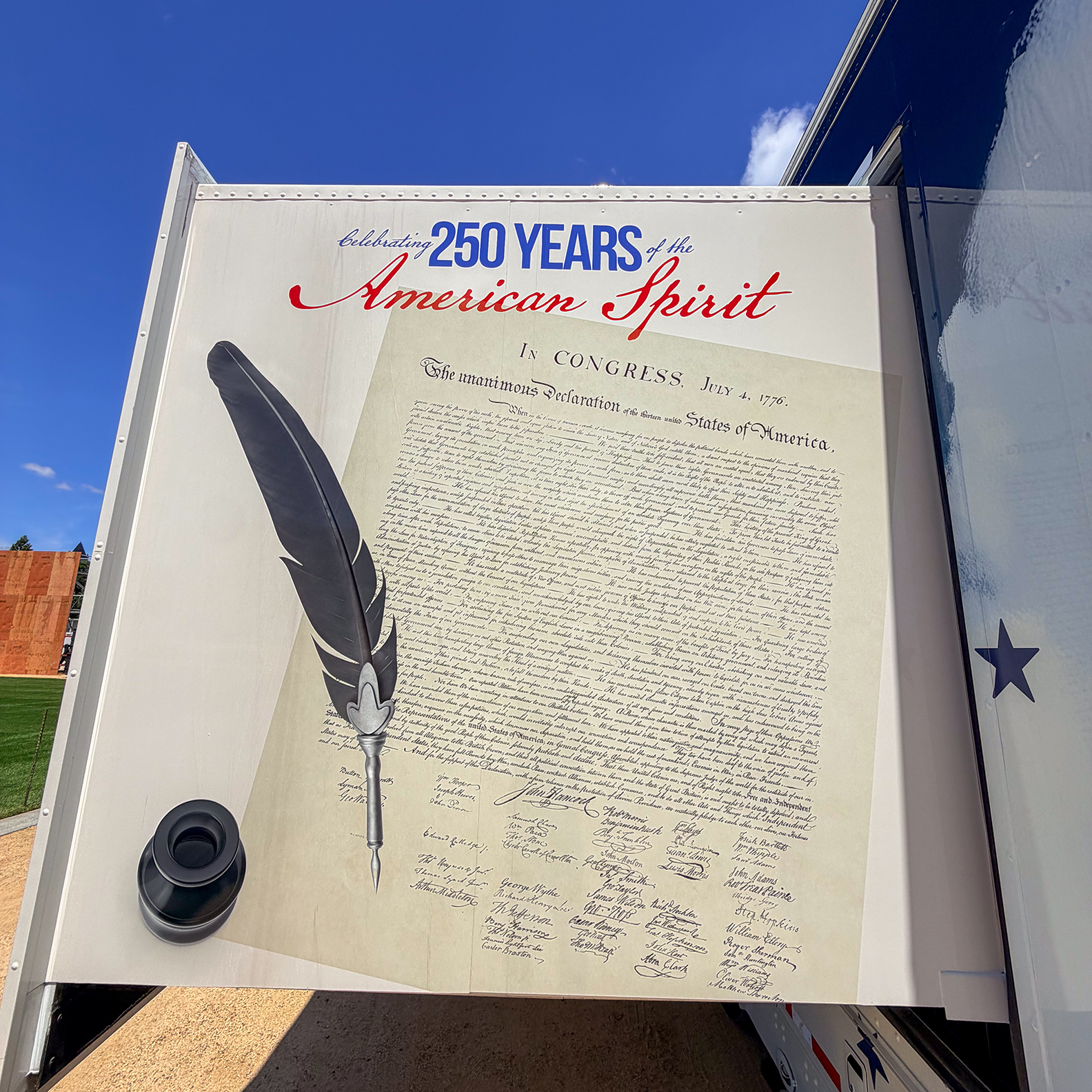
The story of the United States has always moved — by ship, by horse, by rail, by road, by migration, by debate, by invention, by reinvention. Now, as the nation approaches July 4, 2026, and the 250th anniversary of the signing of the Declaration of Independence, that story is being packed into a new kind of traveling museum: the America 250 Freedom Trucks' Mobile Museum.
The Freedom Trucks are part of the broader America 250 and Freedom 250 commemorations, a yearlong national effort to mark the country’s semiquincentennial. Instead of asking every visitor to come to Washington, DC the Freedom Trucks are taking a piece of the founding story outward — into communities that may never make it to the National Archives, the Smithsonian, the National Mall, or the monuments that define the capital’s civic landscape.
A fleet of six custom-designed semi-truck mobile museums is traveling across the country throughout 2026, bringing an interactive history experience to students, families, military communities, fairs, and civic gatherings. The experience is designed for visitors of all ages and focuses on the dramatic arc of American independence: thirteen colonies declaring separation, fighting the British Empire, securing sovereignty, and beginning the long, unfinished work of building a republic.
A Museum That Pulls Up to the Curb
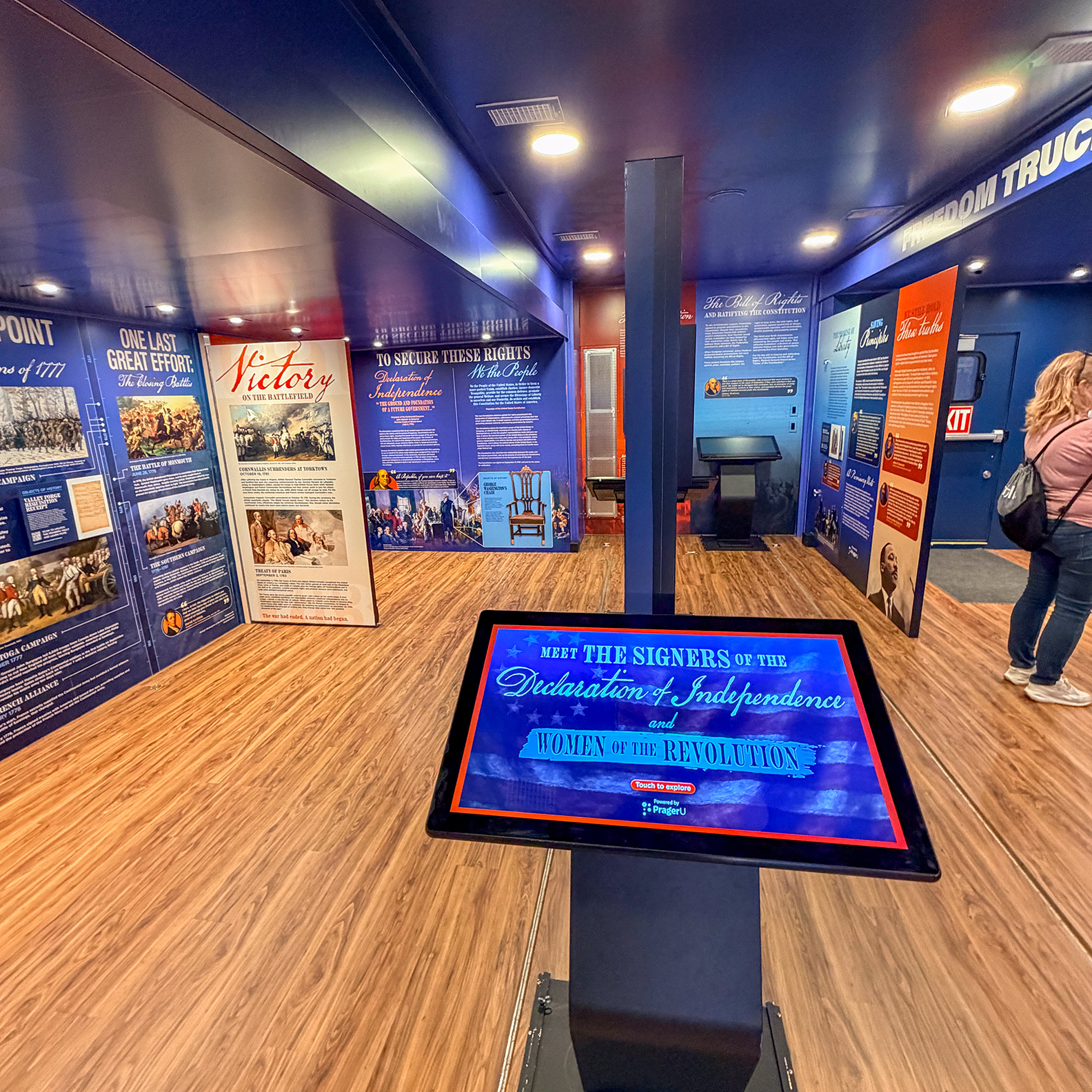
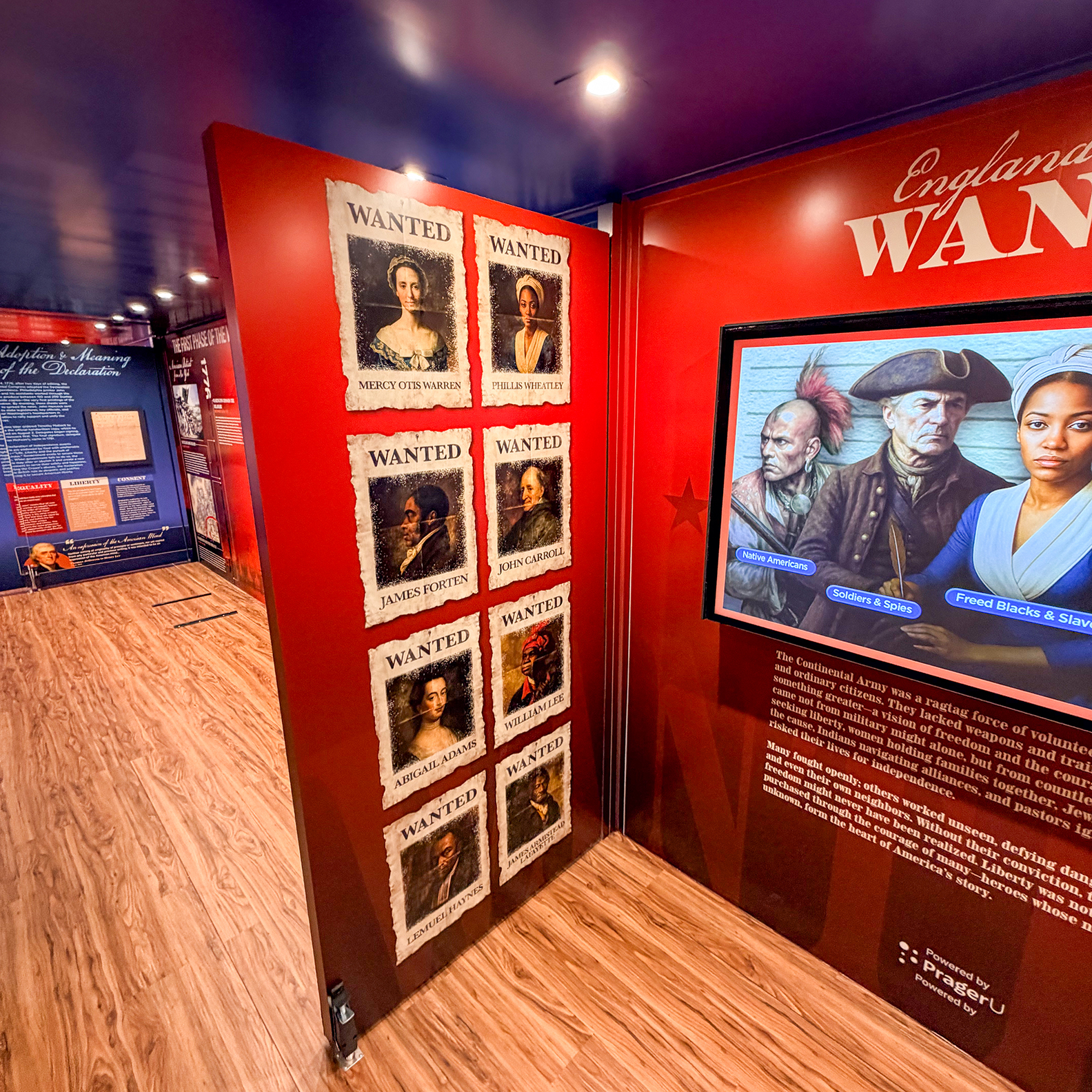
The Freedom Trucks are not simple promotional trailers or static displays. They are built as double-wide, expandable 18-wheeler exhibits, designed to create a walk-through museum experience inside a mobile structure. When the truck opens, it becomes a compact but theatrical gallery — part classroom, part civic exhibit, part digital experience.
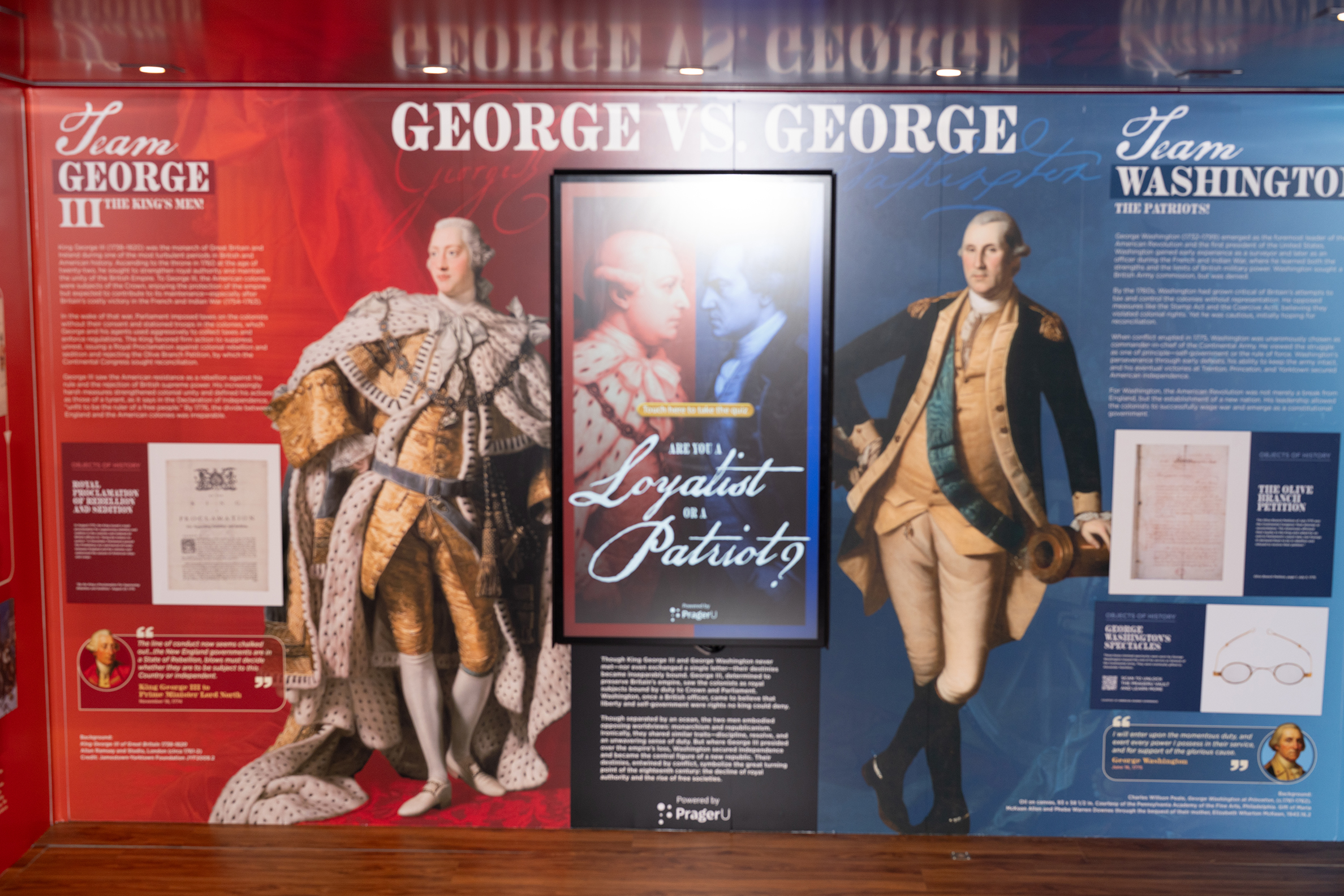
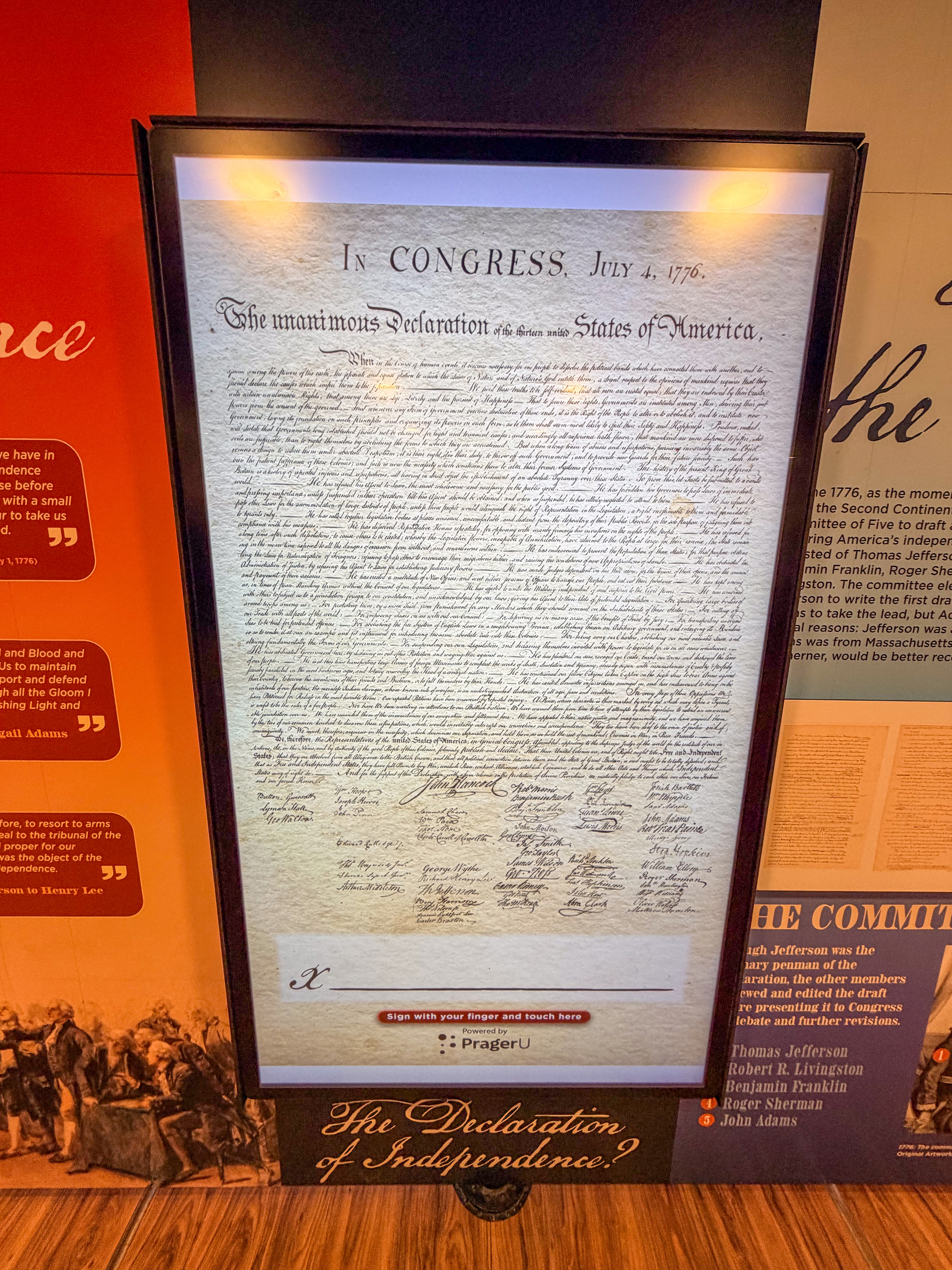
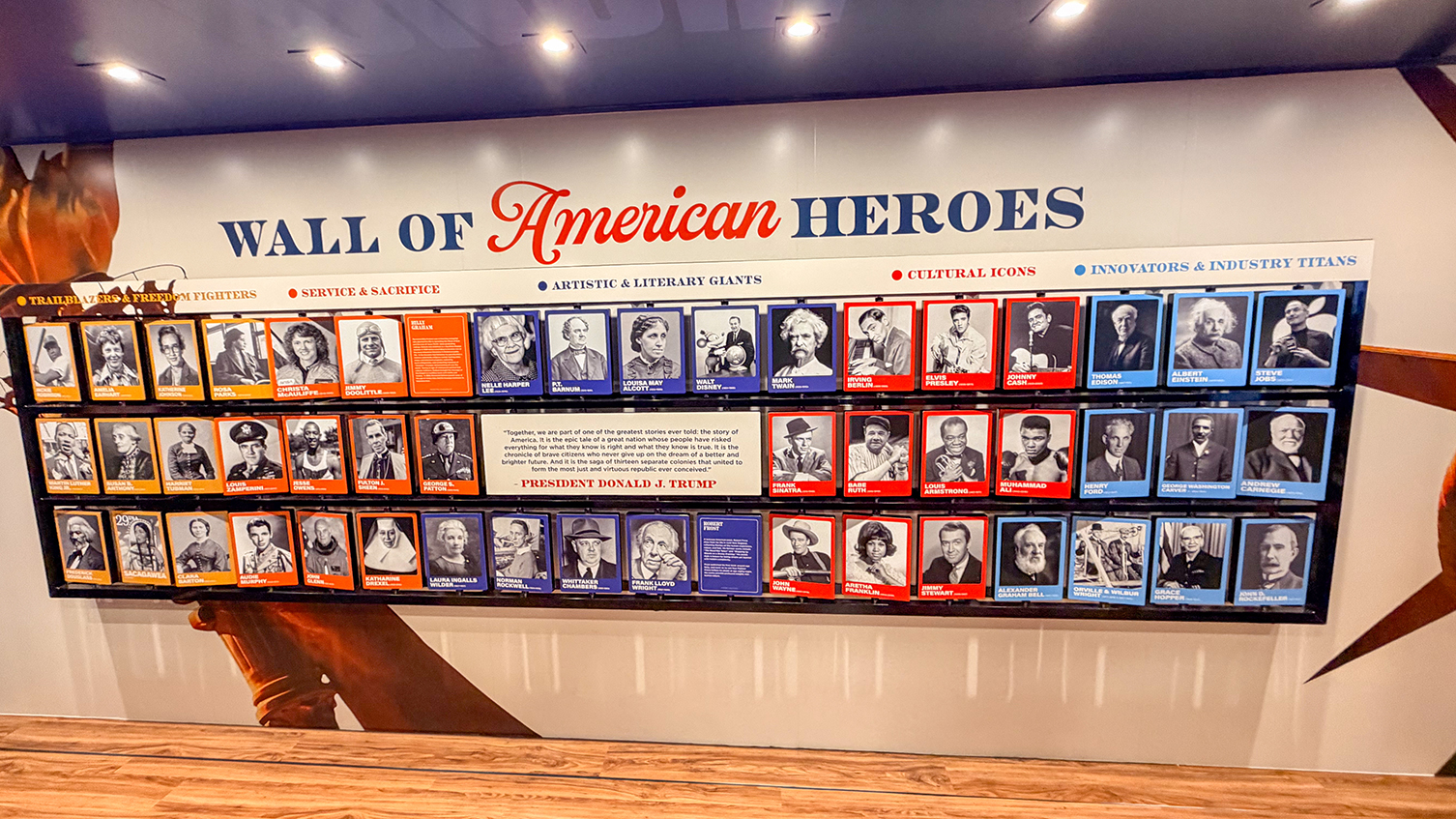
Inside, visitors encounter the founding era through a mix of interactive screens, historical storytelling, audiovisual installations, and hands-on activities. According to America250, the exhibit includes elements such as a “loyalist or patriot” quiz, a digital kiosk where visitors can sign their names to the Declaration of Independence, and a wall of 50 American heroes celebrating figures and achievements across the nation’s history.
That matters because the concept is not just “look at history.” It is “step into the question.” Would you have been a loyalist or a patriot? What does it feel like to add your name to a founding document? Which people, choices, sacrifices, inventions, and movements shaped the America we live in now?
For younger visitors especially, this kind of presentation can do what a textbook often cannot. It makes the Revolution feel less like a distant chapter and more like a series of human decisions made under pressure.
“The Freedom Trucks turn American history into something you do not just read. You enter it, touch it, question it, and carry it with you.”
What Is Inside the Freedom Trucks?
The centerpiece attraction is the blend of history and technology. The trucks feature portraits of Founding figures, including an interactive portrait of George Washington that allows visitors to engage with the past in a modern way. At the DC stop, organizers highlighted an ,AI-powered, interactive portrait of George Washington, the digital Declaration signing experience, and hands-on exhibits focused on the nation’s founding principles and milestones.
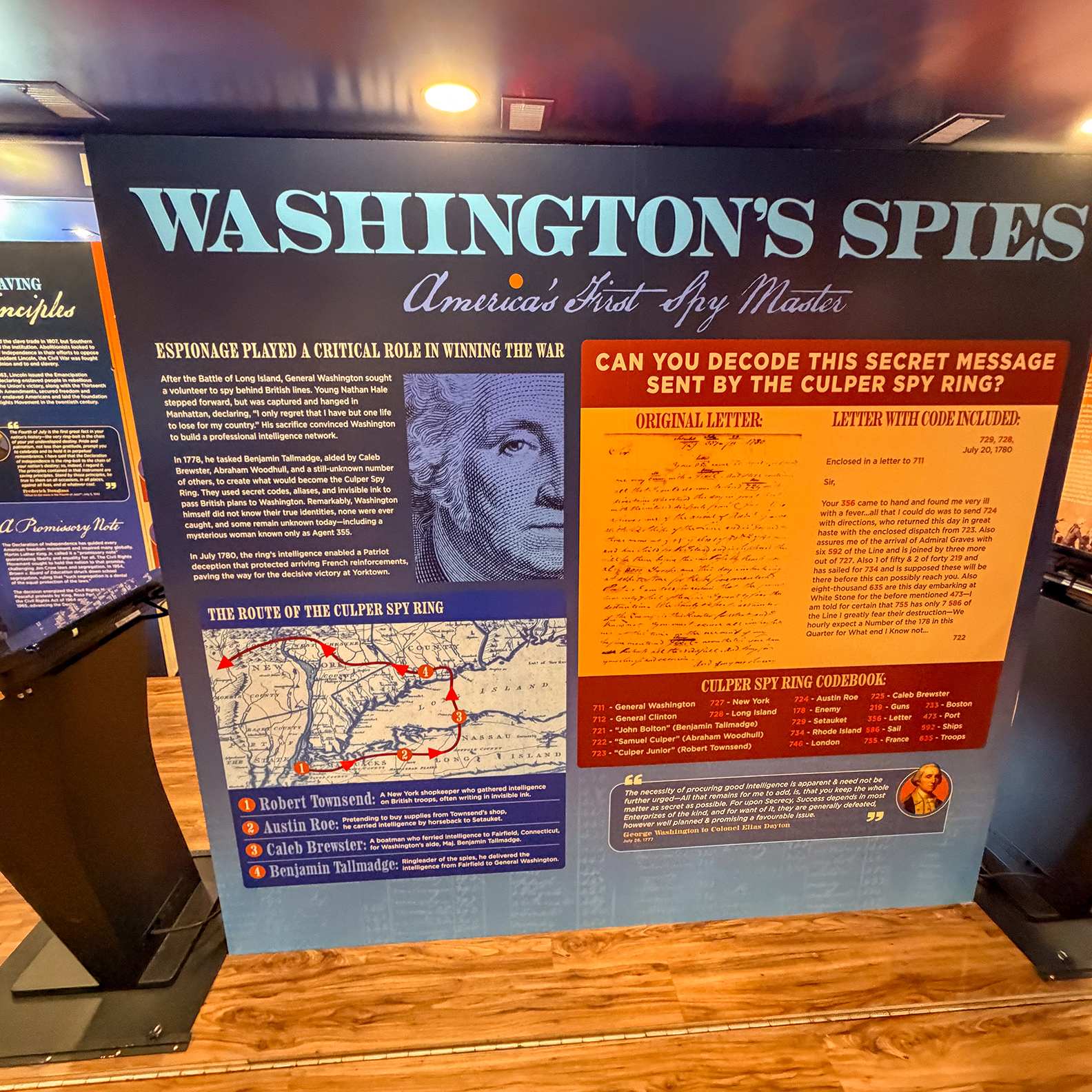
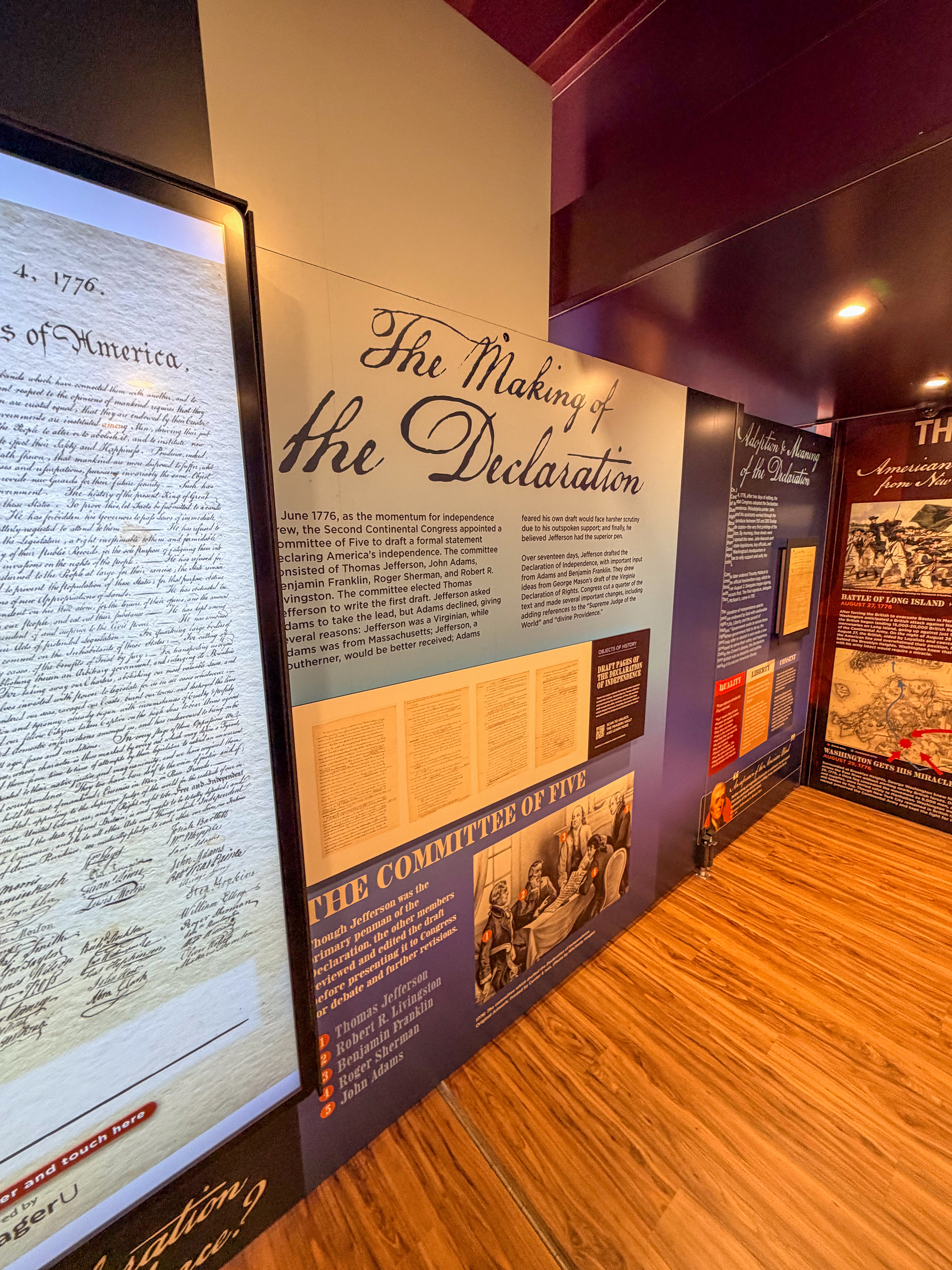
The trucks also include interactive touchscreen activities and games, audiovisual storytelling, artifacts connected to the American Revolution, and materials from Glenn Beck’s American Journey Experience, according to PragerU’s Freedom Trucks description. The experience concludes with a film that looks toward America’s next 250 years, connecting the founding story to questions about national identity, opportunity, and the future.
In practical terms, visitors can expect a compact but layered exhibit experience built around several main ideas:
- The Founding Story
The exhibit walks visitors through the Revolution-era story of independence — the colonies, the Declaration, the war, and the creation of a sovereign nation. - Interactive Civic Questions
Visitors can learn about key figures from the Revolution and their contributions to the founding story. - Digital Declaration Signing
The signing kiosk gives visitors a symbolic way to connect with 1776. It is not a replacement for seeing the real Declaration at the National Archives, but it makes the act of signing feel personal and participatory. - AI Founder Portraits
The AI portrait experience gives the exhibit a modern edge. It uses present-day technology to create a conversational bridge to the Founding generation. - American Heroes Wall
The wall of 50 American heroes broadens the story beyond one moment, pointing visitors toward the achievements and contributions made across 250 years. - Artifacts and Audiovisual Storytelling
Artifacts, images, sound, and cinematic presentation help create a sense of movement, conflict, consequence, and continuity.
The best part of the concept is also the simplest: the museum comes to the people. That is the right instinct. America’s 250th anniversary should not only belong to people who can afford a trip to Washington, DC. A national milestone needs a national reach.
The Freedom Trucks work because they bring the founding story to people where they are — not only where history is traditionally stored.
The Washington DC Stop: A Preview in the Nation’s Capital
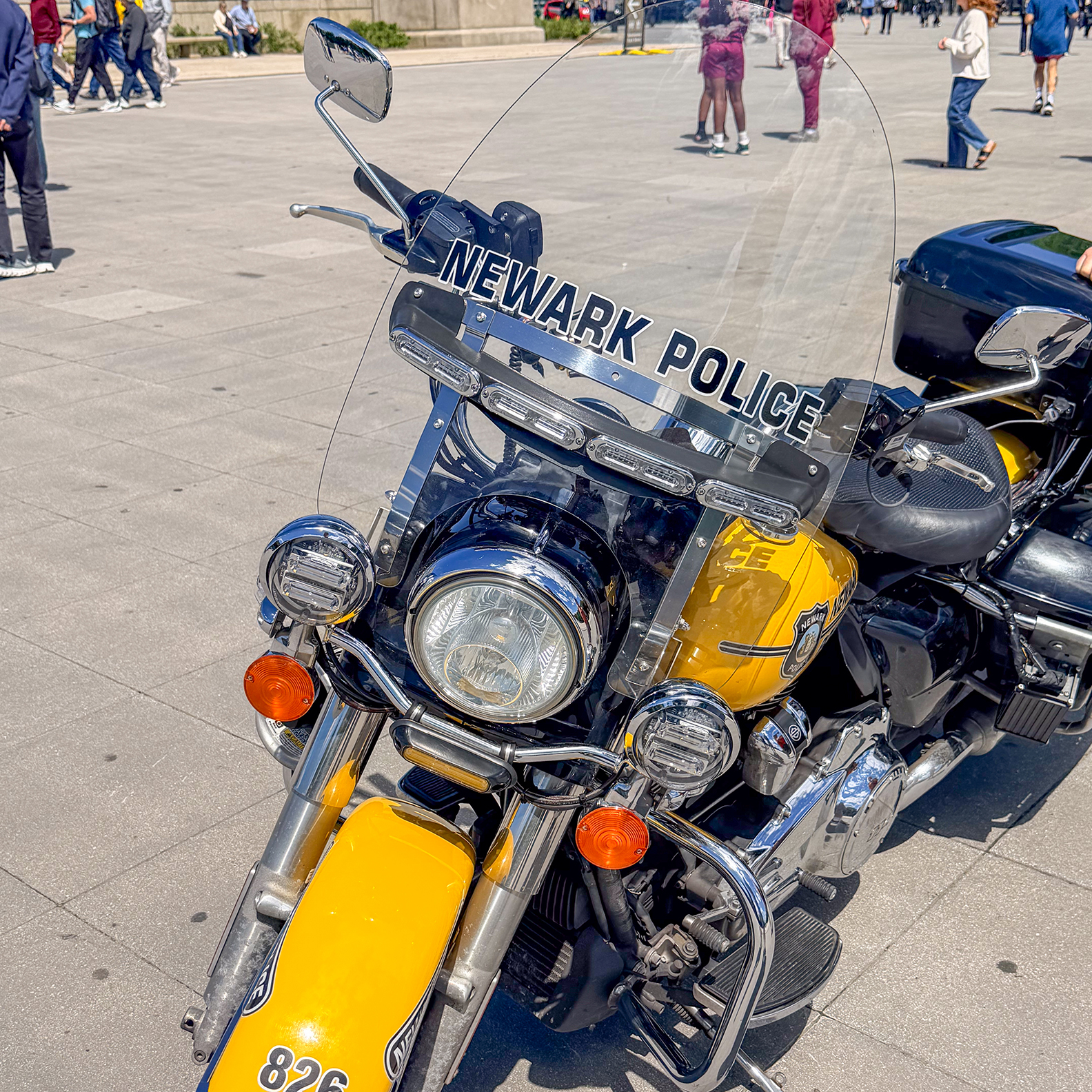
The Freedom Truck made a Washington DC appearance on Wednesday, April 22, 2026, when one of the touring mobile museums was open to the public from noon to 5 p.m. near 7th Street NW. The stop marked the first time the digital exhibit reached the nation’s capital, giving DC visitors a preview of the road-traveling experience before the busiest stretch of the semiquincentennial season.
For Washington DC, the timing was meaningful. The city is not just another stop on the anniversary map. It is the symbolic center of the commemoration. The National Mall holds the Lincoln Memorial, the Washington Monument, the U.S. Capitol, the Smithsonian museums, and the National Archives nearby.
Bringing the Freedom Truck to DC gave the project a national-stage debut feeling. Visitors could stand near the Mall, walk into a mobile museum about the founding, and then step back into a city where that history is physically present in stone, marble, archives, memorials, and public space.
The DC stop also served as a reminder of what makes the 250th anniversary different from an ordinary Fourth of July. This is not simply a fireworks year. It is a year of exhibitions, parades, civic programs, public art, state showcases, museum openings, military honors, cultural festivals, and community events spread across the country.
A Second DC Moment: The Freedom Truck and Rededicate 250 on the National Mall
The Freedom Truck’s Washington story did not end with its earlier spring preview. It also returned to the National Mall in mid-May as part of Rededicate 250: A National Jubilee of Prayer, Praise & Thanksgiving, a large public gathering tied to America’s 250th anniversary.
Held on Sunday, May 17, 2026, the event brought thousands of people to the National Mall for a day centered on prayer, worship, testimony, music, and national reflection. Freedom 250 described the gathering as a moment for Americans from across the country to come together ahead of the nation’s 250th birthday, giving thanks for 250 years of American history while asking for guidance for the years ahead. The official program listed gates opening at 9 a.m., with the full program running from 10:30 a.m. to 6 p.m., and the main stage positioned at 12th Street on the National Mall.
National Mall Gathering
Faith, History, and America’s 250th
The Freedom Truck’s appearance during Rededicate 250 placed the mobile museum inside a larger day of prayer, praise, thanksgiving, and national reflection — a reminder that America’s 250th anniversary is unfolding through many different civic, cultural, and spiritual lenses.
For visitors, the Freedom Truck added a historical and educational layer to the day. Organizers of Freedom 250 said the mobile museum would be on the National Mall during the all-day prayer event, giving attendees a chance to step inside the traveling exhibit while participating in one of the anniversary year’s more faith-centered gatherings.
The pairing made sense from a storytelling standpoint. Rededicate 250 focused on faith, gratitude, national memory, and the future of the country. The Freedom Truck, meanwhile, brought the founding-era story directly onto the Mall through interactive exhibits about independence, the Declaration of Independence, Revolutionary War history, and American heroes. Together, they created a moment where civic history and public faith expression met in one of the most symbolic spaces in the United States.
The Freedom Trucks are being used in multiple ways throughout the anniversary year. They are not only appearing at fairs, schools, races, and civic festivals. In Washington, they have also become part of major symbolic gatherings on the National Mall, from prayer events in May to the Great American State Fair and July Fourth celebrations still to come.
The Great American State Fair: America Takes Over the Mall
The Freedom Trucks are also part of the Great American State Fair, a monthlong celebration on the National Mall that runs from June 25 to July 10, 2026. The fair is designed to showcase the culture, cuisine, music, and traditions of all 50 states, with each state having its own pavilion or exhibit area. The Freedom Trucks will be featured as part of the fair’s lineup of attractions, giving visitors another opportunity to experience the mobile museum in a festive, state-themed context.
This is where the America 250 concept becomes visual, edible, musical, and highly walkable. The fair is expected to feature live music, carnival rides, hands-on partner activations, food, culture, and state-by-state showcases. Think of it as a coast-to-coast road trip compressed into the most symbolic lawn in America.
More Than Pageantry: The Smithsonian Goes Deep
While the Freedom Trucks bring a mobile version of the founding story to the road, the Smithsonian is anchoring the 250th with deeper museum programming across its institutions.
The Smithsonian’s “Our Shared Future: 250” initiative is designed to bring America’s stories to life through exhibitions, collections, storytelling, and public programming. The Smithsonian describes the semiquincentennial as a moment to celebrate, reflect, and look ahead, with every Smithsonian museum and research center connecting to the American story in some form.
One of the most important exhibitions is “In Pursuit of Life, Liberty & Happiness” at the National Museum of American History. The museum describes it as a bold, immersive exhibition exploring the ideals of the Declaration of Independence and tracing how Americans have pursued those promises across 250 years. The exhibition features 250 objects spanning from the 1700s to the present and stretches across the museum’s three floors. It opened on May 14, 2026.
This is the museum counterpart to the Freedom Trucks. The trucks introduce the story in a fast, accessible, traveling format. The Smithsonian expands the story with artifacts, context, complexity, and scale.
Both are needed. The mobile museum gets people curious. The Smithsonian gives them room to go deeper.
Other America 250 Celebrations Coming Up in DC
Washington DC will continue to host major 250th anniversary events throughout 2026. The city’s DC250 calendar includes national, local, cultural, museum, culinary, and civic events across the year. The official DC250 site lists signature local programs including Eat250 in June 2026, a citywide culinary program showcasing DC’s restaurant community, and a DC250 State Fair in September 2026, designed as a local take on a state fair celebrating makers, creatives, and community traditions.
Several major events stand out for the months ahead.
Salute to America 250 & Fireworks
The Salute to America 250 Celebration & Fireworks is scheduled for July 4, 2026 on the National Mall. Freedom 250 lists it as a signature celebration, and DC250 describes the July 4 capstone as a major event with speeches, flyovers, headline performances, and a fireworks finale.
For visitors, this will likely be the emotional peak of the 250th in Washington. July 4 on the Mall is already one of the country’s iconic public gatherings. In 2026, the crowds, security planning, programming, and symbolic weight will be larger.
Smithsonian Arts and Industries Building Temporary Reopening
The Smithsonian’s Arts and Industries Building is expected to reopen temporarily from June through September, with spaces for creative exchange and dialogue about America’s past and future. The programming includes the Folklife Marketplace from June 16 to July 12 and a special edition of “Voices and Votes: Exploring Democracy Across America” from June 16 to September 7.
This is worth watching because the Arts and Industries Building has its own history as a place of national display. A temporary reopening during America’s 250th gives visitors another reason to build a museum-focused itinerary around the Mall.
National Air and Space Museum Gallery Openings
The National Air and Space Museum is scheduled to unveil five galleries on July 1, 2026, coinciding with the museum’s 50th anniversary in Washington DC. The Smithsonian notes that the museum’s original opening in 1976 was its gift to the nation for the Bicentennial, making the 2026 gallery openings a fitting echo of that earlier milestone.
The museum that opened for America’s 200th is renewing itself for America’s 250th.
Great American Farmers Market
DC250 lists the Great American Farmers Market for August 3–8, 2026, with more than 80 vendors from across the country expected to showcase produce, artisan goods, and agricultural products. Daily themes include America’s 250th, health and wellness, community values, wildfire prevention and forestry, natural beauty, and farmers.
This event gives the anniversary a different flavor — less marble monument, more marketplace. It connects the national story to land, food, labor, regional identity, and the people who grow and make things.
Freedom 250 Grand Prix of Washington DC
The Freedom 250 Grand Prix of Washington DC is scheduled for August 22–23, 2026 on the National Mall. DC250 describes it as the first-ever NTT INDYCAR SERIES race on the National Mall, a free two-day motorsports event set against landmarks including the Washington Monument and the U.S. Capitol.
This will probably be one of the most unusual America 250 events in the capital. It is not the traditional image of Washington commemoration, and that is exactly why it will get attention. The idea of world-class racing framed by the National Mall is bold, controversial to some, exciting to others, and visually impossible to ignore.
The Patriot Games
DC250 lists The Patriot Games from September 1 through November 1, 2026, describing it as a first-of-its-kind athletic competition spotlighting male and female high school athletes from every state and territory.
This event shifts the anniversary toward youth, competition, and the next generation. It fits the broader 250th theme of looking backward and forward at the same time.
Why the Freedom Trucks Matter
The Freedom Trucks work because they understand a basic truth: history has to compete for attention.
A glass case alone does not always reach a modern audience. A plaque alone does not always spark curiosity. But a mobile museum with digital portraits, interactive choices, a Declaration signing station, touchscreens, artifacts, and cinematic storytelling has a better chance of pulling in a student, a family, a casual passerby, or someone who did not think they were interested in history.
The format is also practical. Not every school can organize a trip to DC. Not every family can afford museum travel. Not every community has access to major national exhibitions. A fleet of mobile museums does not solve that gap completely, but it narrows it.
And for Washington DC, the Freedom Trucks add another layer to a year already packed with historic programming. They are not replacing the city’s museums, monuments, archives, or July 4 traditions. They are extending the invitation.
Final Word
America’s 250th anniversary will be big, crowded, and symbolic, — exactly as a national milestone should be. The Freedom Trucks offer one of the more accessible pieces of the celebration: a traveling museum that takes the founding story directly to the public and asks visitors to participate, not just observe.
For DC, the trucks are part of a much larger moment. From the Great American State Fair and Smithsonian exhibitions to fireworks, farmers markets, the Freedom 250 Grand Prix, and citywide DC250 programming, Washington is preparing for a year when the country’s past and future will share the same stage.
The smartest way to experience it is not to treat America 250 as one event. Treat it as a season — a rolling, layered, citywide and nationwide invitation to look again at the American story, where it began, where it has struggled, and where it may go next.